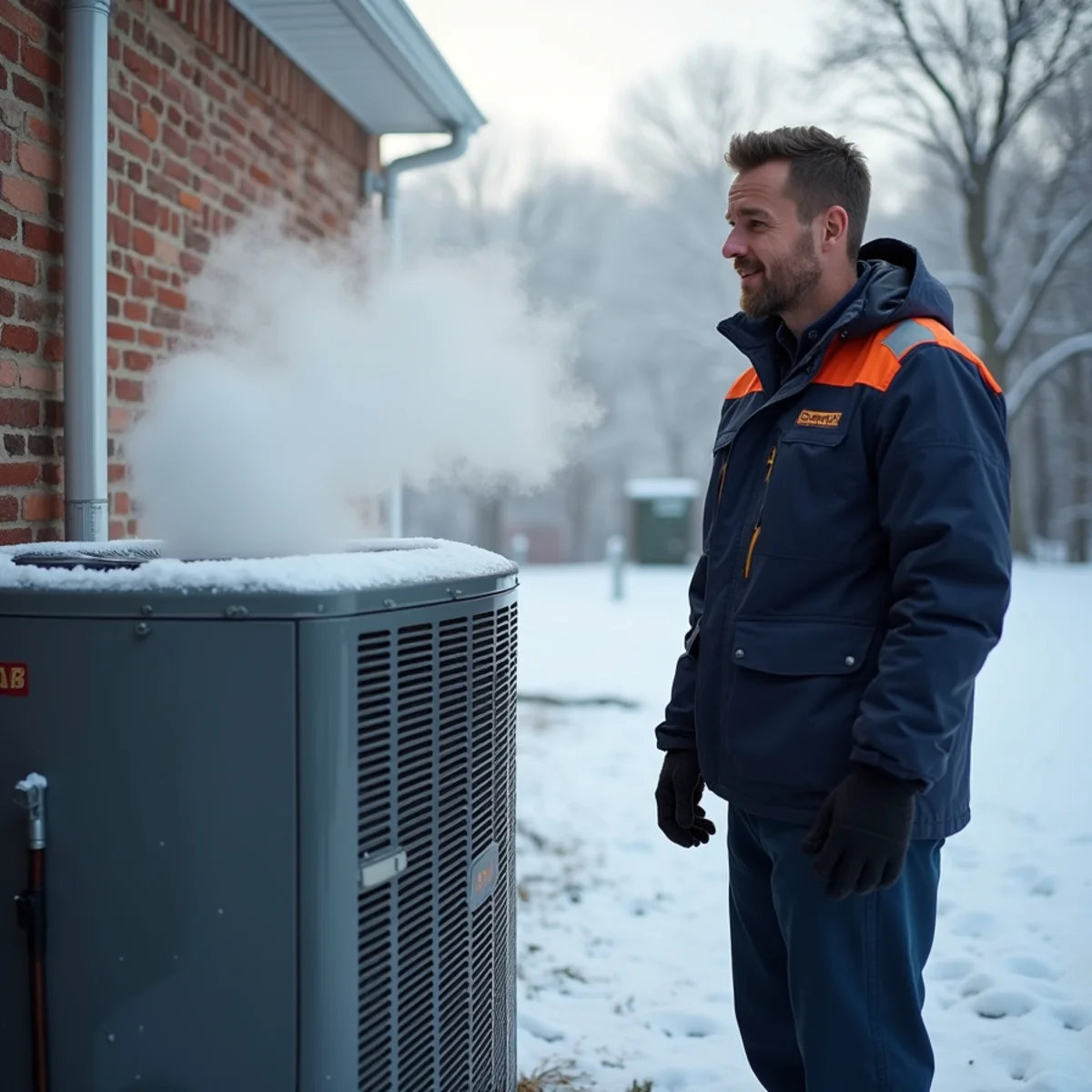
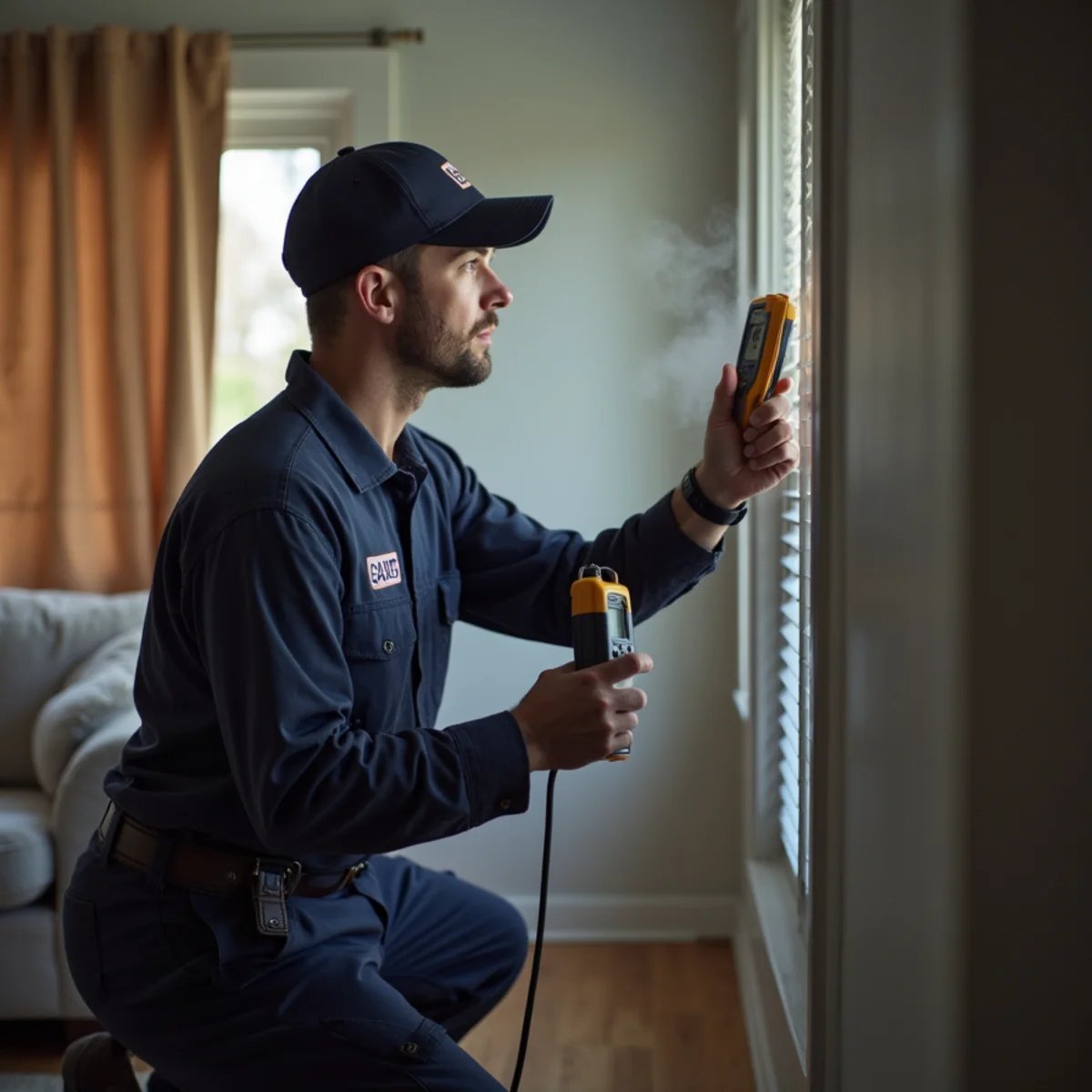
When your AC runs nonstop but the house stays warm and clammy, humidity is often the hidden culprit. Here is how Mount Joy's humid summers stress your system and what to check.
Key takeaways
- Your AC is also your dehumidifier — a cool-but-clammy house often means it is not running long enough to pull moisture out.
- Low refrigerant from a leak, a dirty condenser coil, or restricted airflow all leave the house warm.
- An oversized AC short-cycles, cooling the air fast but never wringing out the humidity.
- Replacing a dirty filter is a safe check; refrigerant, coil, and charge work is pro-only and EPA-regulated.
- For a home that stays muggy, pair a repair with indoor air quality and dehumidification.
The thermostat says 75, the outdoor unit is humming, air is coming out of the vents, and yet the house feels warm, heavy, and sticky. If that describes your Mount Joy summer, the problem may not be the temperature at all. It may be humidity, and it exposes a handful of related failures that a good technician can pin down fast.
Our summers are hot and genuinely humid, and a big part of an air conditioner's job is pulling moisture out of the air, not just chilling it. When indoor humidity climbs above 60 percent, 75 degrees feels like 80, and your system is either undersized, struggling, or failing at the moisture side of its work.
Why humidity makes a working AC feel broken
The EPA recommends keeping indoor humidity between 30 and 50 percent, and problems begin above 60 percent. A properly running air conditioner condenses water vapor on the cold evaporator coil and drains it away, which is why you see condensate trickling from the drain line. When that dehumidification falters, the air feels muggy no matter what the number on the wall says. Comfort is about temperature and humidity together.
The comfort math
At 50 percent humidity, 75°F feels like 75. At 65 percent, the same 75°F feels closer to 80°F. That is why fixing humidity often matters more than dropping the thermostat another two degrees.
The usual suspects behind weak cooling
A frozen evaporator coil
This is the classic humid-summer failure. When airflow drops or refrigerant is low, the coil gets so cold that condensation freezes into a block of ice. Ice insulates the coil, so cooling capacity collapses while the unit runs harder than ever. You may notice weak airflow, a warm house, water around the indoor unit when it thaws, or even ice on the refrigerant line. A dirty filter is the most common trigger.
Low refrigerant charge or a leak
Air conditioners do not consume refrigerant, so if the charge is low, there is a leak. Low charge cripples both cooling and dehumidification and often causes coil freezing. Refrigerant is regulated under EPA Section 608 and must be handled by a certified technician, so this is never a DIY fix, and never something to top off and ignore.
A dirty condenser or coil
The outdoor condenser rejects heat, and when its fins are packed with grass clippings, cottonwood, or dust, it cannot dump heat effectively. The system runs constantly and still loses ground on a hot day. Indoors, a dirty evaporator coil does the same on the cold side.
An oversized system
Counterintuitively, an air conditioner that is too big cools poorly in humid weather. It blasts the air cold and shuts off before it has run long enough to wring out moisture, so the house is cold and clammy at once. Short, powerful cycles are great for temperature and terrible for humidity, which is why proper sizing with an ACCA Manual J load calculation matters so much.
| What you notice | Likely cause | Safe DIY check | Pro fix |
|---|---|---|---|
| Weak airflow, ice on lines | Frozen evaporator coil | Turn AC off, fan on, replace filter | Find airflow or charge cause, thaw and repair |
| Warm air, long runtimes | Low refrigerant / leak | None - EPA regulated | Leak search, repair, recharge to spec |
| Runs constant on hot days | Dirty condenser coil | Rinse fins gently, clear debris | Deep coil clean, check charge |
| Cold but clammy, short cycles | Oversized unit | Confirm filter clean | Manual J review, add dehumidification |
| No cool air at all | Capacitor or contactor | Listen for outdoor fan | Test and replace electrical parts |
What you can safely check
- Replace the air filter. A clogged filter is the top cause of frozen coils and weak airflow in summer.
- If you see ice on the coil or refrigerant line, switch the system to Off but set the fan to On. Running the blower thaws the coil over a few hours. Do not run cooling while it is frozen.
- Go outside and clear grass, leaves, and debris from around the condenser, and gently rinse the fins with a garden hose from the inside out with the power off.
- Confirm all supply registers and returns are open, and that furniture is not blocking airflow.
- Check the condensate drain for standing water, which can trip a safety float switch and stop cooling.
Never run a frozen system
Forcing an air conditioner to cool with a frozen coil can slug liquid refrigerant back to the compressor and destroy it. If you find ice, shut off cooling, run the fan to thaw, and call a technician to find the real cause.
When to call a technician
If the filter is fresh, the condenser is clean, and the coil is thawed but the house still will not cool or stays humid, the problem is inside the sealed system or the controls. Refrigerant leaks, charge adjustments, coil cleaning, capacitor and contactor failures, and dedicated dehumidification all need a licensed pro. Chasing humidity with a portable dehumidifier can help a single room, but it will not fix a leaking or undersized system.
Our licensed technicians handle AC repair across Mount Joy and Lancaster County, and we test both cooling and moisture removal so your home actually feels comfortable. For a house that runs but never gets comfortable, call HVAC Mount Joy PA at +1 (327) 210-5999.
Beat the humidity for good
If muggy summers are a yearly complaint, ask about indoor air quality solutions and whole-home dehumidification, or a right-sized AC installation. Call +1 (327) 210-5999 to schedule an assessment.
Check the temperature split
A healthy system drops the air about 16 to 22 degrees between the return and a supply vent. If yours is much less, something is off — low charge, airflow, or a dirty coil — and it is worth a diagnosis before another humid Lancaster County week.
Related HVAC help in Mount Joy
Services: AC Repair · Indoor Air Quality Solutions
Service areas: HVAC in Lancaster County
Frequently asked questions
A big part of an air conditioner's job is removing moisture. If it is undersized, oversized, low on refrigerant, or short-cycling, it may cool the air slightly without dehumidifying it, leaving the house warm and clammy. A technician can test dehumidification performance directly.
Turn cooling off but leave the fan on to thaw the ice over a few hours, and replace a dirty filter. Never run the AC while the coil is frozen. Once thawed, have a technician find why it froze, since it usually means low airflow or low refrigerant.
No. Refrigerant is regulated under EPA Section 608 and requires certification to handle. Low refrigerant also means there is a leak, so simply adding more without repairing the leak wastes money and harms the environment.
The EPA recommends 30 to 50 percent, and comfort problems begin above 60 percent. Keeping humidity in that range lets you feel comfortable at a higher thermostat setting, which also saves energy.
HVAC Mount Joy PA
Licensed, insured HVAC contractor serving Mount Joy and Lancaster County with same-day and 24/7 emergency service. Have a question about your system? We’re glad to help.