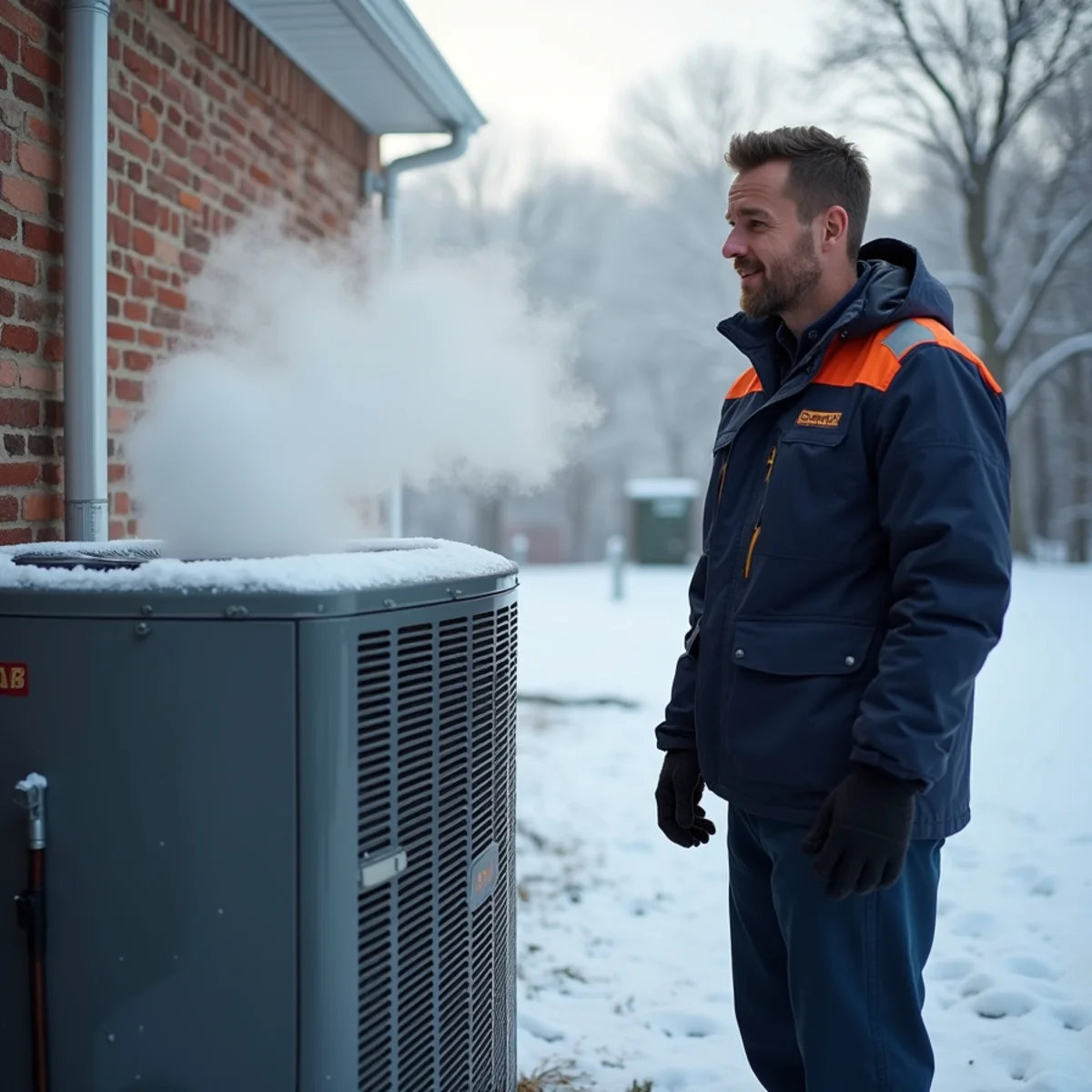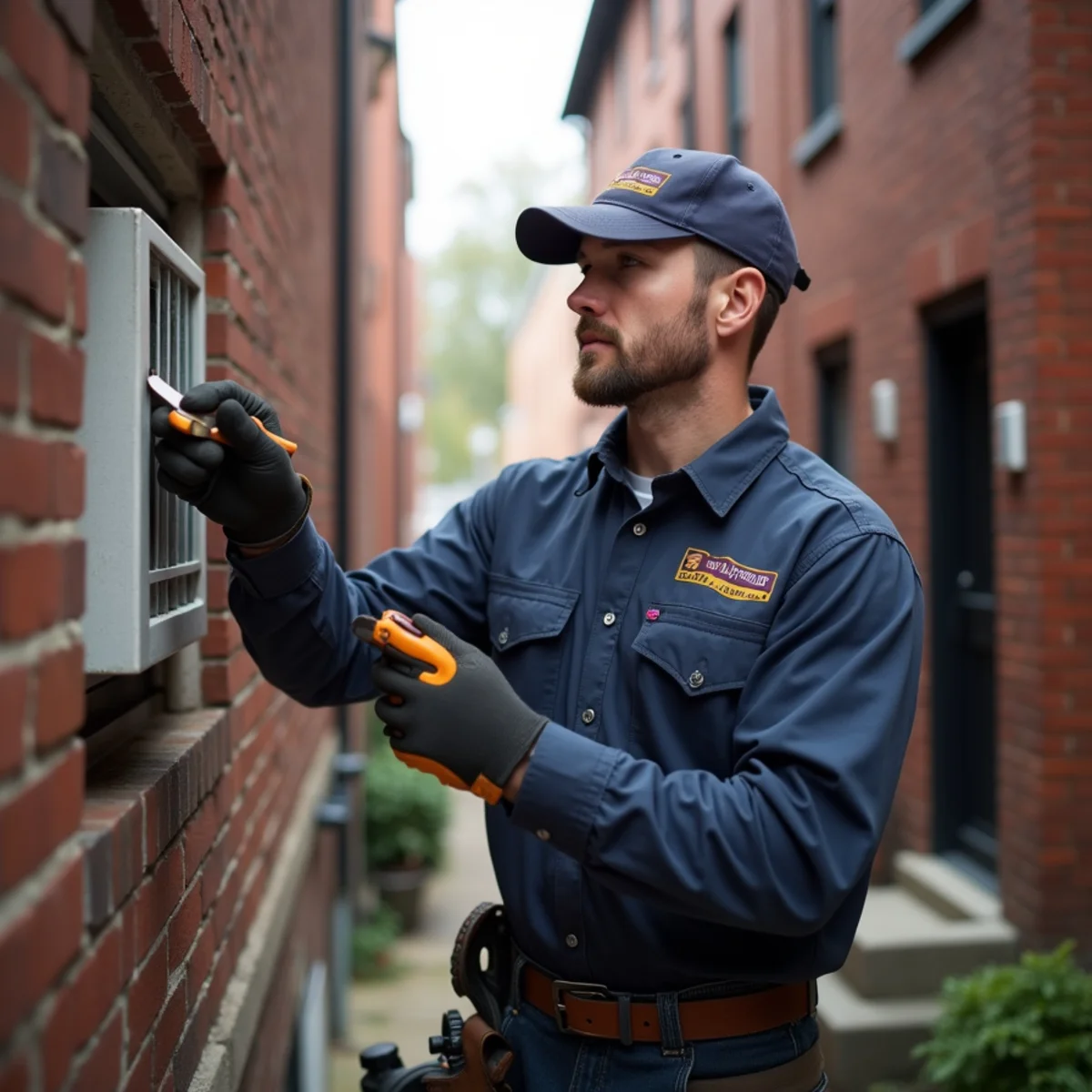
That "one ton per 500 square feet" rule quietly wrecks comfort and efficiency in Mount Joy's older homes. Here is why proper load calculation matters and what it changes.
Key takeaways
- Sizing by square footage alone ignores insulation, windows, air leakage, and layout — the things that actually set the load.
- A Manual J calculation is the honest way to size heating and cooling for an older Mount Joy home.
- Oversized equipment short-cycles, leaves rooms uneven, wears out early, and cannot dehumidify well.
- Undersized equipment struggles on the coldest and hottest days and runs nonstop.
- We size every install with Manual J through our residential HVAC service.
When it is time to replace a furnace or air conditioner, the fastest way to end up uncomfortable is to size the new one by square footage or by simply matching the old unit. That "rule of thumb," usually a ton of cooling per 400 to 600 square feet, was never meant to be precise, and in Mount Joy's older homes it fails more often than it works.
The homes in and around the Mount Joy Historic District, from 1800s brick twins to 1950s ranches, vary so much in insulation, windows, ceiling height, and air leakage that two houses of identical square footage can have wildly different heating and cooling loads. Getting the size right is the difference between a system that just works and one you fight for fifteen years.
Why "bigger is safer" is exactly wrong
Homeowners often assume an oversized system just gives headroom. In practice, oversizing causes more problems than undersizing:
- Short-cycling: An oversized furnace or AC blasts the house to setpoint fast, then shuts off, then restarts. Those short bursts wear out igniters, capacitors, and compressors and waste fuel.
- Poor dehumidification: In our humid summers an oversized AC never runs long enough to wring moisture out of the air, so the house feels cold and clammy at once.
- Uneven temperatures: Short cycles do not run long enough to push heat or cool to the far rooms, so the comfort problems you had get worse, not better.
- Higher cost: You pay more upfront for bigger equipment and more every month in wasted energy and premature part failures.
The counterintuitive truth
A right-sized system runs longer, steadier cycles. Long cycles are what deliver even temperatures, quiet operation, good dehumidification, and a full equipment lifespan. The goal is a system matched to the load, not the biggest one that fits.
Why square footage cannot tell the whole story
Two 1,800-square-foot homes in Mount Joy can have completely different loads depending on factors the rule of thumb ignores entirely:
| Factor | Why it matters in Mount Joy homes |
|---|---|
| Insulation levels | An 1800s brick home with little wall insulation loses heat far faster than a new TND build |
| Windows | Original single-pane wood sashes versus modern double-pane change the load dramatically |
| Air leakage | Old homes leak; tight new construction does not, flipping the equation |
| Ceiling height | 9- and 10-foot ceilings in historic homes add volume square footage misses |
| Orientation and shade | Sun exposure and mature trees shift cooling load room by room |
| Occupancy and appliances | People, kitchens, and electronics all add internal heat gain |
This is why a farmhouse on propane in Rapho Township and a downtown rowhome of the same size can need different equipment. Square footage is one input among many, not the answer.
What a proper load calculation involves
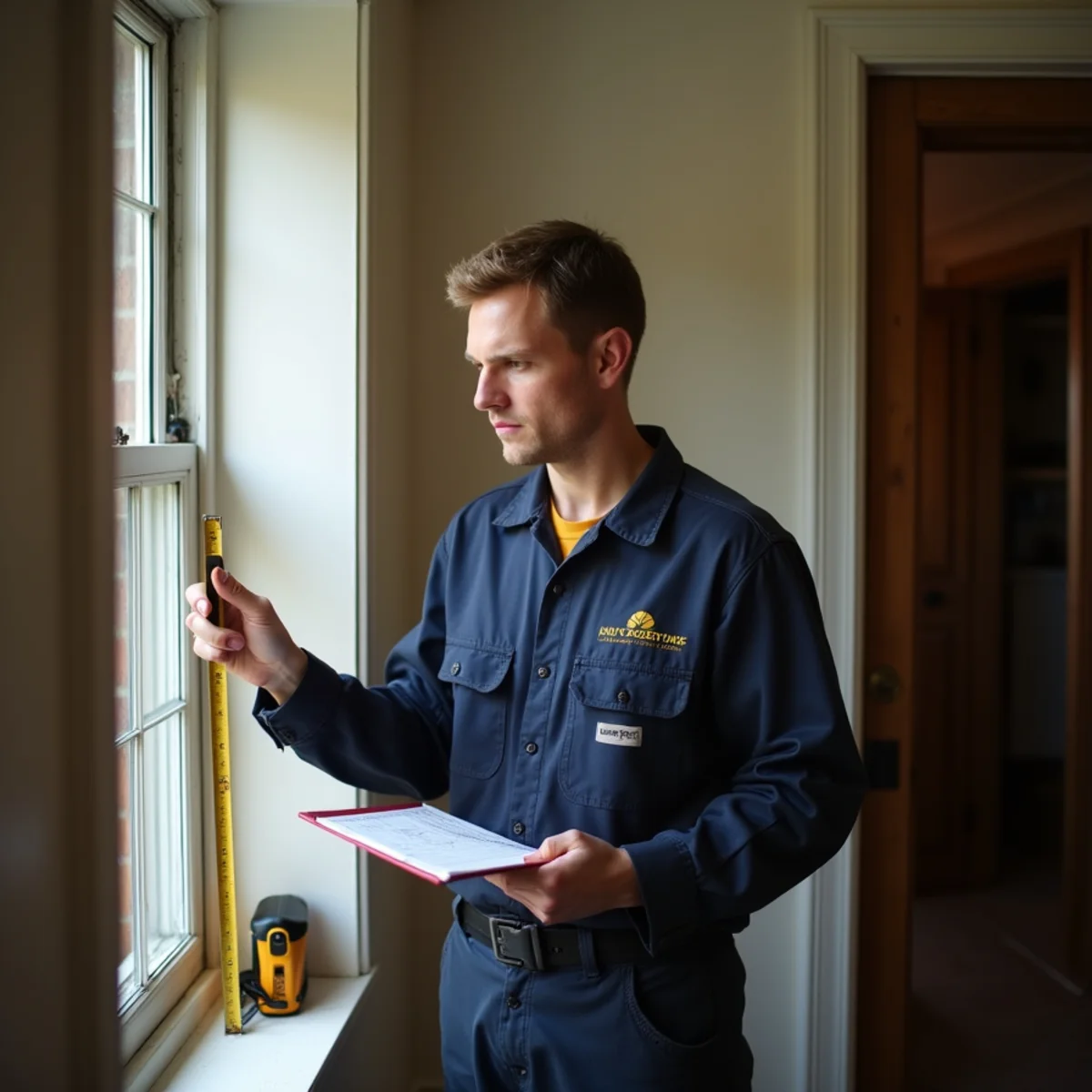
The industry standard is the ACCA Manual J load calculation, and it is what separates engineering from guessing. A technician measures and accounts for:
- Room-by-room dimensions, ceiling heights, and volume.
- Insulation values in walls, attic, and floors.
- Window and door types, sizes, and orientations.
- Air infiltration, ideally verified rather than assumed.
- Local design temperatures, our hard-freeze winters and hot, humid summers.
- Internal heat gains from people and appliances.
That load then feeds Manual S, which selects equipment matched to it, and Manual D, which designs the ductwork to deliver the airflow. Done together, these three make sure the box, the ducts, and the house all agree. Skip any one of them and the other two cannot compensate: a perfectly sized furnace still disappoints if the ducts choke its airflow, and flawless ducts cannot rescue a wildly oversized condenser. For older Mount Joy homes especially, where nothing about the construction is standard, that whole-system view is what turns a replacement into a genuine upgrade.
Beware the "same size as before" quote
If a contractor sizes your new system by eyeballing the house or matching the old nameplate, be cautious. The old unit may have been wrong for decades, and matching it just repeats the mistake. Ask whether a Manual J load calculation was performed.
What the homeowner should do
You cannot run a Manual J yourself, but you can make sure it happens and give it good inputs. Before a replacement:
- Ask any contractor whether they perform a Manual J load calculation, and expect a yes.
- Tell them about comfort complaints, the room that never warms, the clammy summer feel, so those get engineered out, not carried forward.
- Mention recent improvements like new windows, added insulation, or air sealing, since these lower the load and may allow smaller, cheaper equipment.
- Consider pairing a right-sizing with duct improvements or air sealing so the whole system performs.
Right-sizing also matters when you change fuels. An oil-to-gas conversion or a switch to a heat pump is the perfect moment to calculate the true load rather than inherit an old oversized rating.
HVAC Mount Joy PA sizes every replacement with a real load calculation, because we would rather install the right system once than sell you a bigger one that disappoints. If you are planning a furnace or AC installation, call +1 (327) 210-5999 and ask for a Manual J-based quote.
Get the size right the first time
A load calculation costs a fraction of a system and pays for itself in comfort and lower bills. Talk to us about residential HVAC sizing and design. Call HVAC Mount Joy PA at +1 (327) 210-5999 to schedule an in-home assessment.
Bigger is not better
If a contractor quotes a larger system than your old one "to be safe," be skeptical — especially after you have added insulation or new windows. A right-sized unit runs longer, quieter cycles that keep an old house even and dry.
Related HVAC help in Mount Joy
Services: Residential HVAC Services · Furnace Installation & Replacement
Service areas: HVAC in Rapho Township
Frequently asked questions
Manual J is the ACCA industry standard for calculating a home's exact heating and cooling load. It accounts for insulation, windows, air leakage, ceiling height, orientation, and local climate, then sizes equipment to that load instead of a square-footage guess.
No. Oversized systems short-cycle, dehumidify poorly, wear out faster, and often make uneven temperatures worse. A right-sized system runs longer, steadier cycles that deliver even comfort and lower energy bills.
Not reliably. The old unit may have been oversized or undersized for decades, and homes change with new windows, insulation, and air sealing. A fresh load calculation gives an accurate size for the house as it is today.
Older homes vary enormously in insulation, window type, ceiling height, and air leakage, so two houses of equal square footage can have very different loads. Rules of thumb ignore all of that, which is why they fail so often here.
HVAC Mount Joy PA
Licensed, insured HVAC contractor serving Mount Joy and Lancaster County with same-day and 24/7 emergency service. Have a question about your system? We’re glad to help.