The hot-water boilers in Mount Joy's 1800s brick homes make a whole vocabulary of noises. Here is how to read banging, kettling, and gurgling, and which sounds mean call a pro now.
Key takeaways
- Kettling — a rumbling like a kettle — usually means scale on the heat exchanger boiling water unevenly.
- Banging or knocking can be air in the loop, water hammer, or expansion as pipes heat and cool.
- Gurgling often points to trapped air that needs bleeding from the system or radiators.
- Bleeding a radiator is a safe DIY step; descaling, circulator, and expansion-tank work is pro territory.
- Persistent noise is worth diagnosing early with our boiler repair team before it worsens.
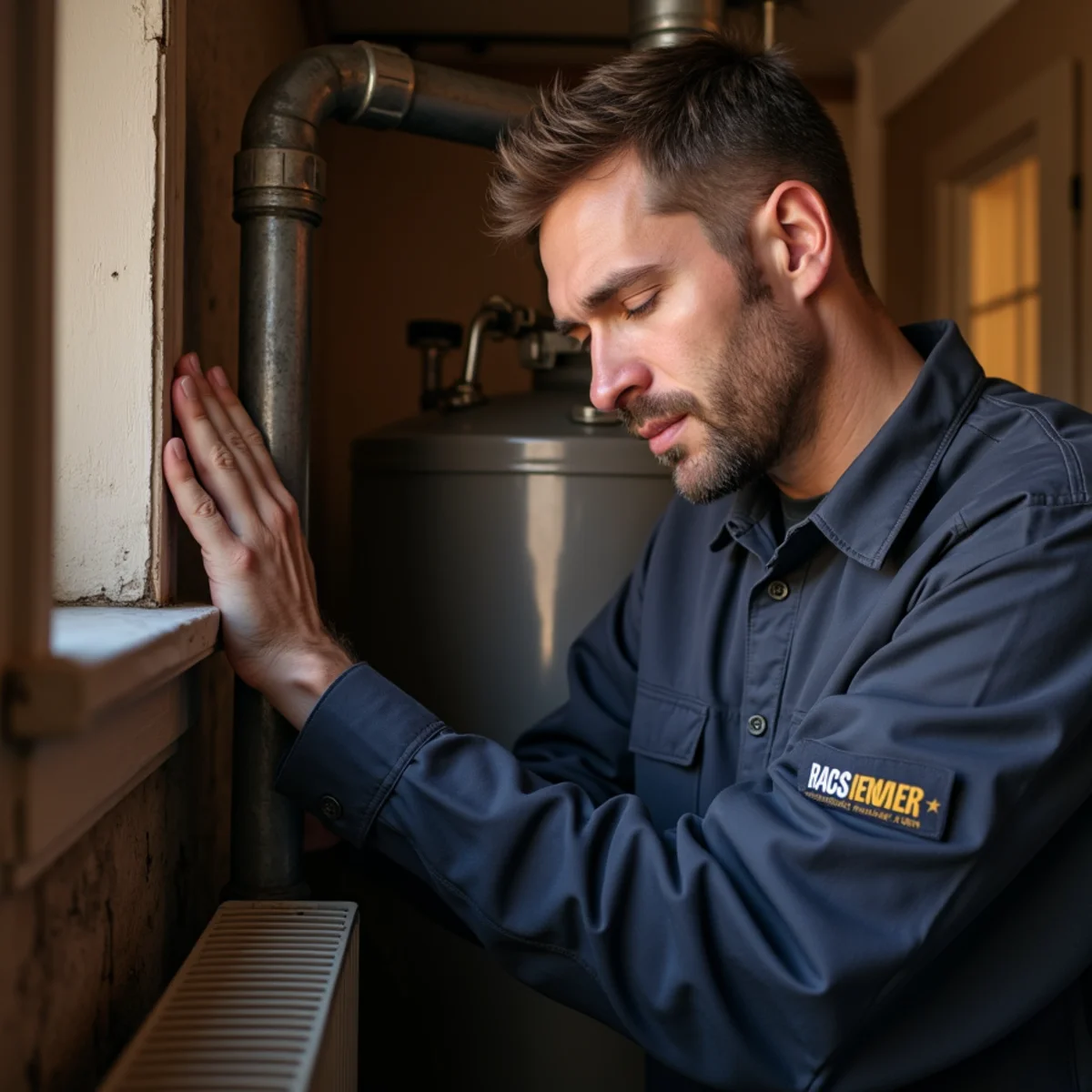
Walk into the basement of one of Mount Joy's 1800s brick twins and you will often find a cast-iron hot-water boiler that has been quietly heating the place for decades. When that boiler starts banging, whistling, or gurgling, it is not just old-house character. Each sound has a specific mechanical cause, and reading them correctly can be the difference between a cheap fix and a burst pipe.
Because so many homes in the Mount Joy Historic District run hot-water boilers with radiators and limited or no ductwork, boiler noise is one of the most common heating complaints we hear here. Let us translate the noises.
Kettling: the whistle or rumble
Kettling is a rumbling, whistling, or percolating sound, like a kettle coming to a boil, and it usually comes from the boiler itself rather than the pipes. It happens when scale and sediment build up on the heat exchanger. The buildup creates hot spots where water flashes to steam and then collapses, and that rapid boiling is what you hear.
Our region sits on limestone karst, so mineral-rich hard water is common, and that mineral content is exactly what forms the limescale that causes kettling. Left alone, kettling makes the boiler work harder, run hotter, and eventually crack a section. It is a clear call-a-pro sound, because clearing scale involves flushing or chemically treating the system.
Banging and knocking: water hammer and expansion
A sharp bang or a series of knocks has a few possible sources, and they range from harmless to serious:
- Expansion noise: As pipes heat and cool through a Mount Joy freeze-thaw day, metal expands against joists and clamps and lets go with a knock. Annoying, but usually harmless.
- Water hammer: A loud bang when the boiler or a zone valve shuts, caused by a pressure surge as flowing water stops abruptly. This points to air in the system, a failing valve, or pressure problems.
- Trapped air: Air pockets moving through the pipes create banging and reduce heat to upper rooms, a frequent issue in tall, narrow historic rowhomes.
- Overheating / kettling turned violent: Severe scale can make a boiler bang hard as steam pockets slam. This is the dangerous version and needs immediate attention.
Watch the pressure gauge
If your boiler bangs and the pressure gauge reads well above the normal 12 to 15 psi cold range, or if the relief valve is discharging water, shut the system down and call for boiler repair. High pressure with banging can signal a failed expansion tank or a stuck control, which is a rupture risk.
Gurgling and trickling: air and low water
Gurgling, trickling, or a sloshing sound almost always means air is trapped in the system or the water level is low. In a hot-water heating loop the pipes and radiators should be completely full of water. When air gets in, whether from a small leak, a failed automatic air vent, or fresh water added to the system, it collects at high points and gurgles as water tries to move past it. Those same air pockets are why one radiator stays stone cold while the rest of the house is warm.
| Sound | Likely cause | Safe DIY check | Pro fix |
|---|---|---|---|
| Whistling / rumbling (kettling) | Limescale on heat exchanger | Note pressure and temp | Power flush, descale, or treat water |
| Sharp bang on shutoff | Water hammer / valve | Listen for which zone | Inspect zone valves, add arrestor, purge air |
| Knocking as it heats | Pipe expansion | Confirm pipes touching joists | Add clearance, cushion clamps |
| Gurgling / trickling | Trapped air or low water | Bleed radiators, check pressure | Find leak, replace air vent, refill and purge |
| Humming or buzzing | Circulator pump or transformer | None | Test circulator and controls |
What you can safely do yourself
- Read the pressure gauge when the boiler is cold. It should sit around 12 psi; note the number for your technician.
- Bleed a gurgling or cold radiator with the small bleed key: open the valve until air hisses out and a steady stream of water appears, then close it. Have a rag and cup ready.
- Feel your radiators. One cold radiator among warm ones usually means trapped air; a whole cold floor points to a circulation or pump problem.
- Make sure nothing flammable is stored against the boiler and that the area is dry, since our limestone basements are prone to moisture.
Bleed radiators top-down
In a multi-story historic home, bleed the highest radiators first, since air rises to the top of the system. Working top to bottom clears trapped air far more effectively than random bleeding.
Where DIY ends and a technician begins
Bleeding a radiator and reading a gauge are fine. Everything past that, descaling a heat exchanger, replacing an expansion tank, repairing a circulator pump, chasing down water hammer, or diagnosing a boiler that runs high pressure, belongs to a licensed technician. These old cast-iron systems are forgiving until they are not, and a cracked section or failed relief valve is both expensive and dangerous.
HVAC Mount Joy PA works on the hot-water boilers that heat so many of our historic homes, and we offer honest diagnosis instead of a rushed replacement pitch. If your boiler is banging, kettling, or gurgling, call +1 (327) 210-5999 for boiler repair and we will tell you exactly what the noise is costing you.
Keep the quiet in your old home
An annual boiler service catches scale, low pressure, and tired circulators before they get loud. Pair it with our HVAC maintenance plan, or call +1 (327) 210-5999 for same-day help in Mount Joy and the historic district.
Note when the noise happens
Tell us whether the sound comes on startup, mid-cycle, or as the boiler cools — the timing narrows the cause fast. A quick phone video from a safe distance helps our tech arrive knowing whether to bring descaler, a circulator, or an expansion tank.
Related HVAC help in Mount Joy
Services: Boiler Repair & Service · HVAC Maintenance & Tune-Ups
Service areas: HVAC in Lancaster County
Frequently asked questions
Kettling is caused by limescale on the heat exchanger creating steam pockets, common with our hard limestone-area water. It is not an immediate emergency, but it stresses the boiler and can crack it over time, so schedule a descale or flush with a technician.
Often yes. Gurgling usually means trapped air, and bleeding the radiator with the bleed key until water runs steadily clears it. If gurgling returns quickly, you likely have a leak or a failed air vent that needs a pro.
It depends. Occasional expansion knocks are harmless, but loud banging combined with high pressure, a discharging relief valve, or overheating is a rupture risk and warrants shutting the system down and calling for emergency repair.
HVAC Mount Joy PA
Licensed, insured HVAC contractor serving Mount Joy and Lancaster County with same-day and 24/7 emergency service. Have a question about your system? We’re glad to help.