The carbon monoxide symptoms, equipment red flags, and emergency steps every Mount Joy household should know before heating season begins.
Key takeaways
- Carbon monoxide is colorless and odorless — working alarms on every level are the only reliable warning.
- Flu-like symptoms that ease when you leave the house, a yellow burner flame, and soot around appliances are red flags.
- If an alarm sounds, get everyone out, call 911 from outside, and do not go back in until responders clear it.
- A cracked heat exchanger, blocked flue, or poorly venting appliance is a common source we test for during a safety check.
- Book a certified CO and gas-leak safety inspection before each heating season.
Carbon monoxide earns its nickname — the silent killer — because it gives you nothing to go on. No color, no smell, no taste. It slips out of a cracked heat exchanger or a blocked flue and mixes into the air your family breathes, and the first real warning many households get is a symptom that looks exactly like the flu. In a town full of older homes and aging heating systems, knowing what to watch for is not optional.
This guide covers the two kinds of warning signs that matter — what CO does to your body and what your equipment does before it fails — plus the exact steps to take the moment an alarm sounds.
The symptoms: when the house is making you sick
Low-level carbon monoxide exposure mimics common illness, which is what makes it so dangerous. The tell is the pattern, not any single symptom.
- Headache, dizziness, nausea, and fatigue that appear indoors and ease when you leave the house.
- Symptoms that hit multiple people — or pets — in the household at the same time. A whole family with the same headache is a red flag.
- Confusion, blurred vision, shortness of breath, or a feeling of drunkenness with no cause.
- Symptoms that reliably worsen through the evening as the furnace runs more, then improve after a day away.
If you suspect CO, get out first — investigate later
Do not open windows and stay to look for the source. Get every person and pet outside into fresh air immediately, then call 911 from outside. Carbon monoxide poisoning worsens with each additional minute of exposure. Only return when emergency responders or a technician tell you the air is safe.
The equipment red flags most people miss
Long before anyone feels sick, a struggling combustion appliance often leaves visible clues. If you have a gas or oil furnace, a boiler, or a water heater, learn these.
| What you notice | What it may mean |
|---|---|
| Burner flame is yellow or orange, not crisp blue | Incomplete combustion — a CO risk |
| Soot or black scorch marks around the furnace or vent | Backdrafting or venting failure |
| Heavy condensation on windows near the unit | Poor venting of combustion gases |
| A stale, stuffy, or faintly sharp odor when heat runs | Flue or exchanger problem |
| Rust on the vent pipe or flue connections | Corrosion and possible leaks |
| Pilot light that keeps blowing out | Draft or venting issue |
The most serious of these is a cracked heat exchanger — the metal wall that is supposed to keep combustion gases separate from the warm air blown through your house. When it cracks, CO can pass into your living space. This failure is more common on older furnaces, and there are plenty of those in Mount Joy’s 1950s-through-1980s ranches and century-old homes downtown. It is one of the main reasons a fall inspection matters.
Detectors: the layer that actually saves lives
Because CO is undetectable by human senses, working alarms are non-negotiable. Placement and upkeep matter as much as having them.
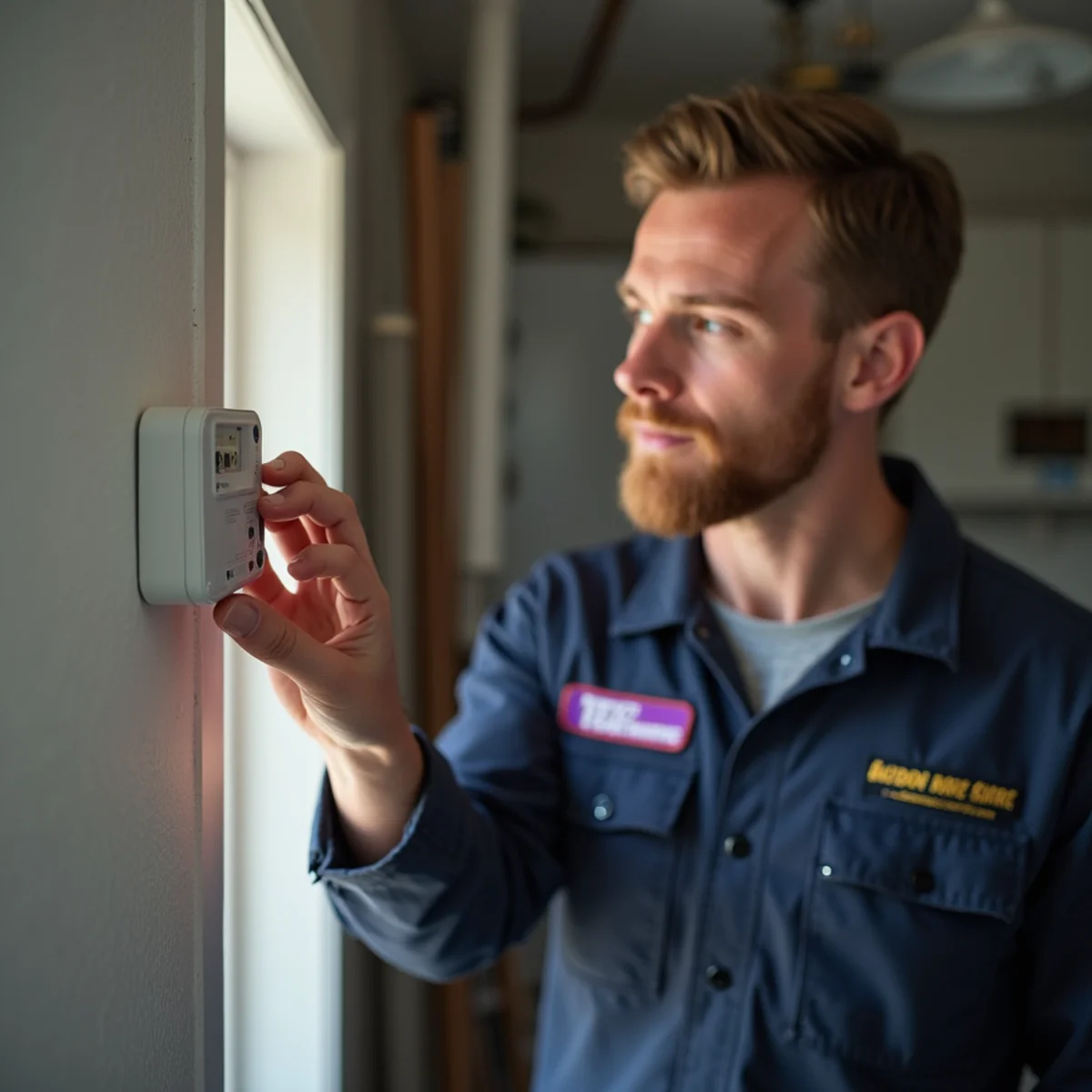
- Install a CO alarm on every level of the home and outside each sleeping area, so an alarm can wake you.
- Keep alarms at least 15 feet from fuel-burning appliances to avoid nuisance trips, but within range to catch a real leak.
- Test every alarm monthly, replace batteries at least yearly, and replace the whole unit per the manufacturer’s date — most sensors expire in five to seven years.
- Choose alarms with a digital readout so you can see low-level, long-term concentrations, not just alarm-level spikes.
Detectors warn you — they do not fix the source
A sounding alarm means CO is already present. Detectors are your last line of defense, not your first. Pair them with annual combustion-appliance inspections so problems are caught at the equipment, before any gas ever reaches the air you breathe.
Prevention that keeps CO out of the air
The reliable way to prevent carbon monoxide is to keep combustion equipment tuned and vented correctly. A professional heating inspection checks the heat exchanger for cracks, confirms the flue and vent are clear and drafting properly, verifies clean combustion, and tests for CO at the appliance. This is exactly what our carbon monoxide safety service covers, and it is the single most effective step a household can take before the furnace runs all winter.
A few habits help between visits: keep the area around the furnace and water heater clear, never run a generator, grill, or car in an attached garage, and make sure exterior vents stay clear of snow and leaves. Blocked vents force combustion gases back into the house — a common and preventable cause of winter CO incidents across Lancaster County.
It is worth remembering that carbon monoxide is a byproduct of any fuel-burning appliance, not just a gas furnace. The oil-fired boilers and furnaces still heating many farmsteads off the gas main, wood stoves, propane water heaters, and fireplaces all deserve the same annual attention. If your home runs on oil or propane, or you are weighing an oil-to-gas conversion, folding a combustion-safety check into that decision protects your family and often improves efficiency at the same time. And when you replace aging equipment, insist on a proper installation — venting sized and pitched correctly is a core part of keeping CO out of the living space, not an optional extra.
One more habit costs nothing: pay attention to timing. If your headaches, drowsiness, or nausea reliably clear up during the day away from home and return in the evening, do not write it off as a busy schedule or seasonal bug. That day-and-night pattern is one of the clearest fingerprints of a low-level leak, and it is exactly the kind of clue that should prompt a call before anyone gets seriously ill.
If your detector has sounded, you have noticed any of the equipment red flags above, or it has simply been years since your furnace was inspected, do not gamble on it. Call HVAC Mount Joy PA at +1 (327) 210-5999 for a carbon monoxide safety inspection from licensed, insured local technicians.
Worried about carbon monoxide? Call +1 (327) 210-5999.
Schedule a combustion-safety and CO inspection for your Mount Joy home. We check the heat exchanger, venting, and combustion, and test for CO at the source — with a written report and honest recommendations.
Replace alarms on schedule
CO alarm sensors wear out — most are rated for 5 to 7 years, and a chirping or expired unit gives false peace of mind. Note the replace-by date on the back and pair alarm replacement with your annual furnace safety check.
Related HVAC help in Mount Joy
Services: Gas Leak & Carbon Monoxide Safety Inspection · Furnace Repair · HVAC Maintenance & Tune-Ups · Oil-to-Gas Conversion
Service areas: HVAC in Lancaster County · HVAC in Mount Joy Township
Frequently asked questions
Early signs mimic the flu without a fever: headache, dizziness, nausea, and fatigue that ease when you leave the house. The strongest clue is several people or pets feeling ill at once, with symptoms worse in the evening as the furnace runs. If that pattern appears, get everyone outside and call 911.
Put an alarm on every level and outside each sleeping area so it can wake you. Keep detectors at least 15 feet from fuel-burning appliances to avoid false alarms. Test them monthly, change batteries yearly, and replace the units on the schedule printed on them, typically every five to seven years.
Yes. A cracked heat exchanger or a partially blocked flue can leak CO while the furnace still heats the house. That is why visual clues like a yellow flame, soot, or heavy window condensation matter, and why an annual combustion inspection is the reliable way to catch a hidden leak.
Treat it as real. Move everyone and any pets outside into fresh air immediately, then call 911 from outside. Do not stay to open windows or hunt for the source. Only re-enter when emergency responders or a qualified technician confirm the air is safe and the source is corrected.
HVAC Mount Joy PA
Licensed, insured HVAC contractor serving Mount Joy and Lancaster County with same-day and 24/7 emergency service. Have a question about your system? We’re glad to help.