Little Chiques Creek runs right through Mount Joy, and when it comes up, basements go under. Here is how to keep your furnace, water heater, and ducts out of the water.
Key takeaways
- Homes near Little Chiques Creek face real basement flood risk that can drown a furnace, boiler, or water heater set at grade.
- Elevating equipment onto stands or platforms above the local flood level is the single best protection.
- Moving controls, condensate, and electrical up out of harm’s way limits damage when water does get in.
- After any high water, a flooded HVAC system needs inspection before it is safe to run again.
- We elevate and protect at-risk systems and respond fast with 24/7 emergency HVAC service.
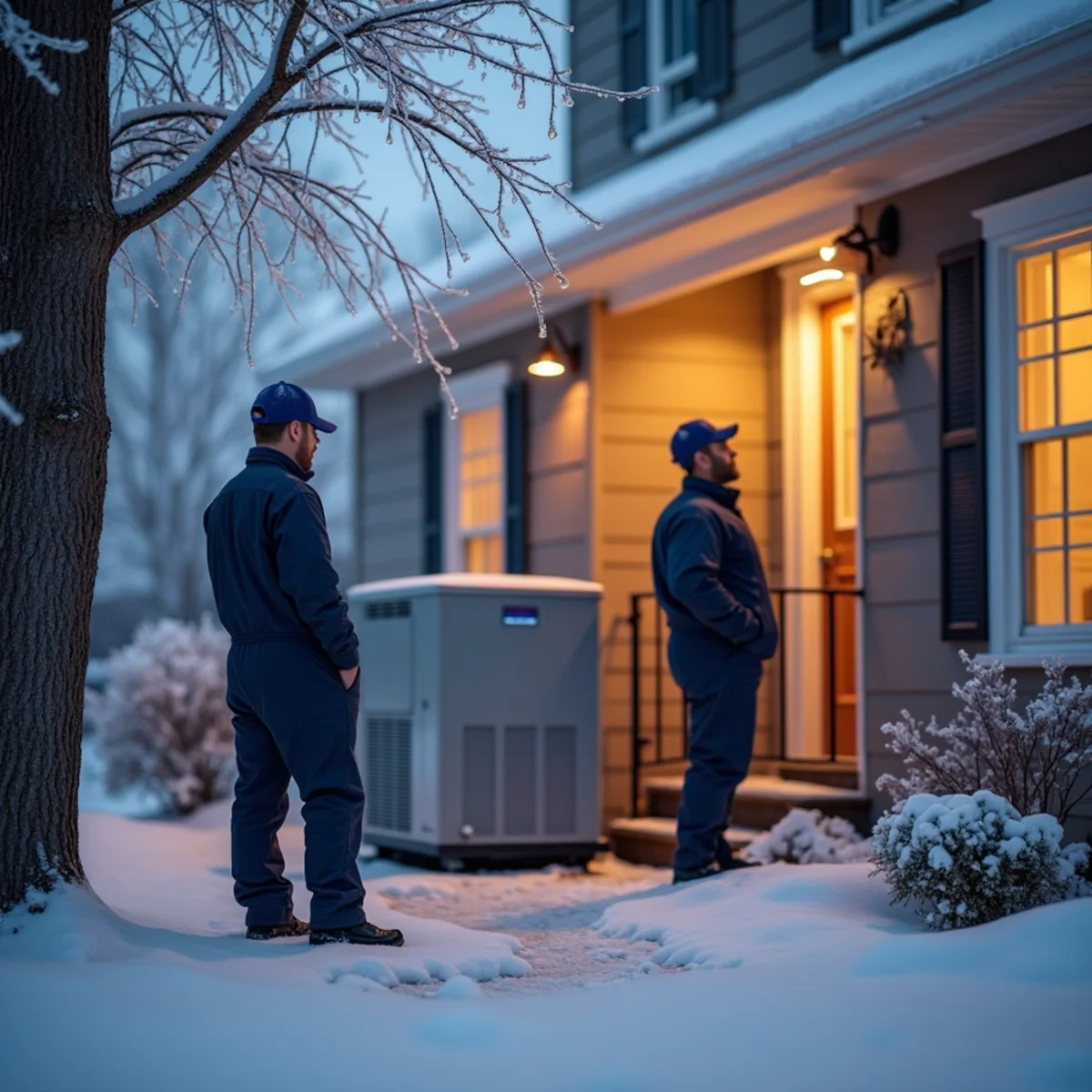
Little Chiques Creek is a quiet, pretty thing most of the year, winding through the middle of Mount Joy on its way to the Susquehanna. Then a summer cloudburst parks over the watershed, or a rapid snowmelt hits frozen ground, and that quiet creek climbs its banks. Basements along the low ground fill fast, and the furnace, water heater, and ductwork sitting on the slab are usually the first casualties.
If your home sits anywhere near the creek, or on the low side of a street that drains toward it, your basement mechanical room is a flood-risk zone whether or not you are in a mapped flood plain. Lancaster County's limestone geology makes this worse: water that should soak away instead finds fractured bedrock and backs up. Protecting the equipment down there is not paranoia. It is planning.
Why basement HVAC and floodwater do not mix
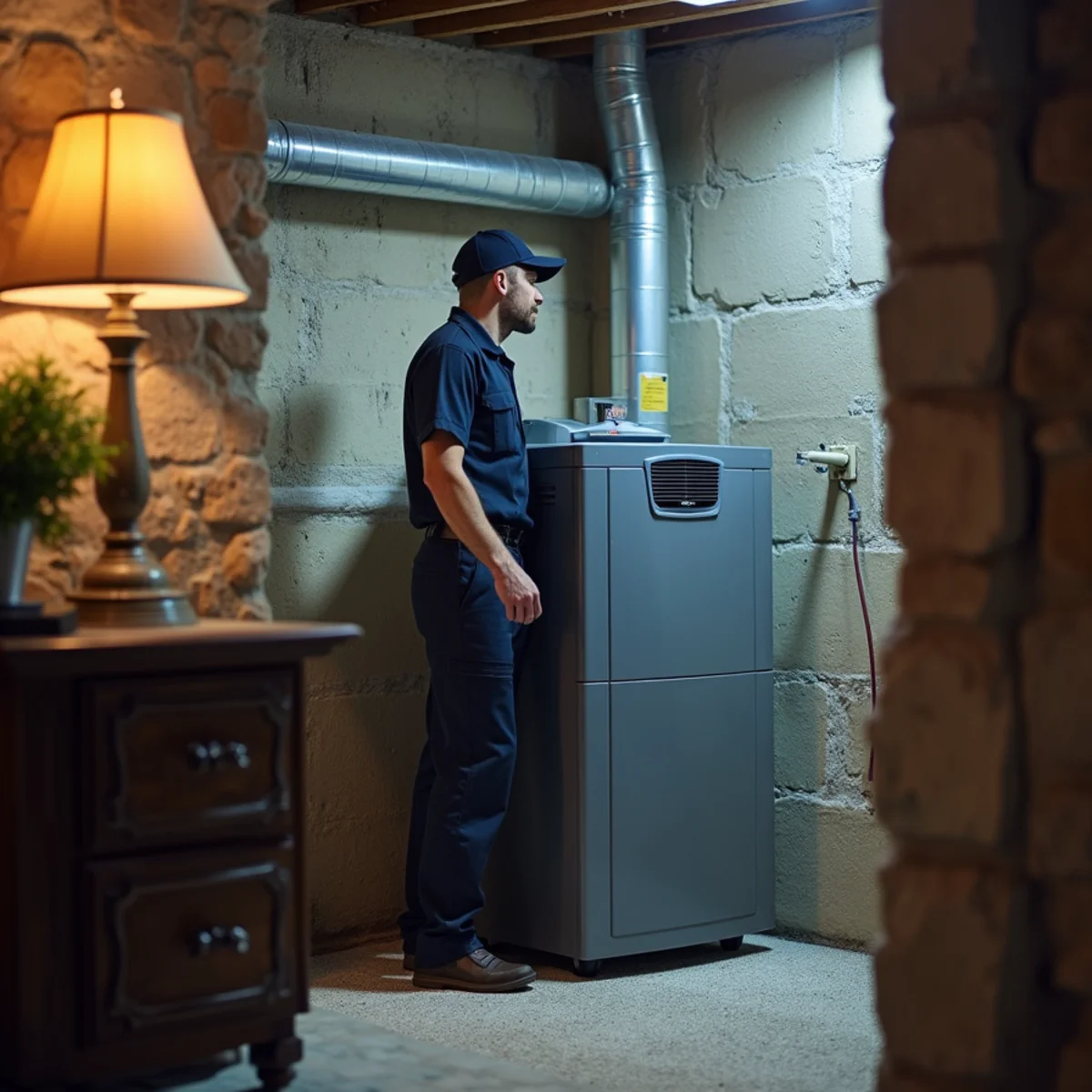
A furnace is not just metal. It is a gas valve, a control board, a blower motor, and a heat exchanger. Submerge any of that and the damage is rarely something you can dry out and trust. Silt works into the burners and blower bearings. The control board corrodes. Gas valves that have been underwater can fail in either direction, and a stuck-open valve is a serious safety issue.
Never relight flooded equipment yourself
If your furnace, boiler, or water heater has been touched by floodwater, do not turn it back on. Federal safety guidance and every manufacturer agree: flooded gas control valves and electrical components must be replaced, not dried. Shut off the gas and power, and call for a professional inspection.
Ductwork tells its own long story. Metal ducts that flooded trap water and silt at every low point, then breed mold in the fiberglass liner for months. That mold ends up in the air you breathe every time the blower runs. After a flood, ducts often need cleaning or, in bad cases, replacement, which is why we treat ductwork as part of any real flood recovery. The same goes for the insulation wrapped around basement ducts and pipes; once it wicks up floodwater it holds moisture against the metal and never fully dries, so it usually has to come out.
Raise it before the water comes
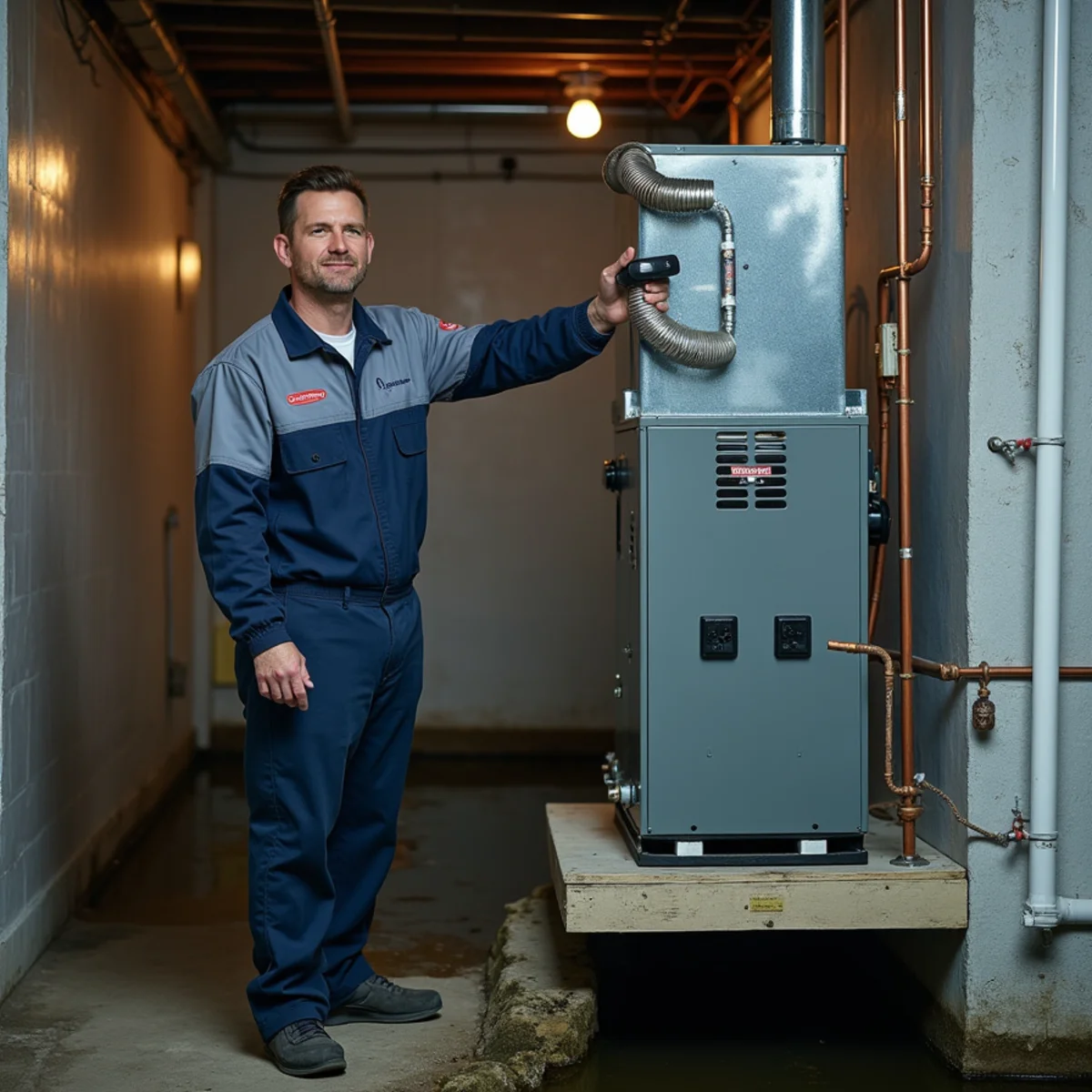
The single most effective protection is elevation. Getting the sensitive parts of the system up off the slab keeps a nuisance flood from becoming a total loss.
- Set furnaces and boilers on a raised concrete or steel housekeeping pad, ideally above the historic high-water line for your block
- Elevate the water heater on a stand, or relocate it to an upper floor or utility closet where practical
- Move the electrical disconnect, thermostat wiring junctions, and condensate pump above the expected flood height
- Anchor equipment so buoyant floodwater cannot float and topple it
- Install a battery-backup sump pump; the grid often fails in the same storm that floods you
A backwater valve and a good sump are cheap insurance
In karst country, storm surge can push water up through floor drains. A backwater valve on the drain line plus a properly sized sump pit with battery backup stops most nuisance flooding before it reaches the furnace pad.
What to do the moment water rises
- Shut off electricity to the basement at the panel if you can reach it safely and dry; never wade into an energized flooded space
- Shut off the gas supply to basement appliances at the meter or appliance valve
- Get people and pets out of the wet area and stop using basement fixtures
- Once water recedes, photograph everything for insurance before you move or clean anything
- Call for professional inspection of every gas and electric appliance before restarting
Time matters after the water goes down. The EPA guidance most restoration pros follow is to dry out wet areas within 24 to 48 hours to head off mold. A whole-home dehumidifier and air movers pull moisture out of masonry and framing far faster than open windows, and they are part of how we stabilize a flooded basement.
| Equipment | If submerged | Best protection |
|---|---|---|
| Gas furnace / boiler | Usually replace controls or unit | Raised pad above flood line |
| Water heater | Replace if gas valve wetted | Elevate or relocate upstairs |
| Ductwork (metal) | Clean or replace, mold risk | Reroute low runs higher |
| Condensate pump | Replace, cheap and critical | Mount above flood height |
When the creek does not wait for business hours
Flooding does not check the clock, and neither do we. If Little Chiques has been in your basement and you are staring at a soaked furnace on a Sunday night, our emergency HVAC repair line is staffed around the clock. We will make the equipment safe first, then walk you through what can be saved and what has to be replaced, with your insurance documentation in mind. Homeowners over on Marietta Avenue and the low streets near the creek know this drill; we would rather help you prepare than clean up.
Whether you want a flood-readiness assessment before the next big storm or you have water in the basement right now, call HVAC Mount Joy PA at +1 (327) 210-5999. We know Mount Joy's flood-prone blocks and we respond fast.
24/7 flood response across the borough
HVAC Mount Joy PA offers emergency service and flood-hardening for basement HVAC throughout Mount Joy and nearby East Donegal Township and the low-lying river towns. Licensed, insured, and on call every day of the year.
Dry within 24 to 48 hours
The EPA guidance for a wet area is to begin drying within 24 to 48 hours to limit mold. If your basement equipment took on water, get it assessed quickly — a musty return can push mold spores through the whole house.
Related HVAC help in Mount Joy
Services: 24/7 Emergency HVAC Repair · Ductwork Repair & Installation · Indoor Air Quality Solutions
Service areas: HVAC in East Donegal Township · HVAC in Lancaster County
Frequently asked questions
No. A furnace that appears to run after being submerged can still have a compromised gas valve, corroding control board, or silted-in burners that fail without warning. Manufacturers and federal safety guidance require replacing flooded gas and electrical components rather than drying them. Have it inspected before you rely on it.
Aim to get the equipment above the historic high-water mark for your block, plus a margin. Many Mount Joy homeowners near Little Chiques Creek raise units 18 to 36 inches on a concrete or steel pad. A technician who knows your street can recommend a specific height.
Standard homeowners policies typically exclude flood damage; that usually requires separate flood insurance. Regardless of coverage, photograph everything before cleanup and get a professional inspection report, which helps with any claim. We are not insurance advisors, so confirm details with your carrier.
Flooded ductwork traps water and silt and can grow mold in the liner. Low duct runs that were submerged usually need thorough cleaning and often replacement. Getting the basement dried within 24 to 48 hours limits how far mold spreads through the system.
HVAC Mount Joy PA
Licensed, insured HVAC contractor serving Mount Joy and Lancaster County with same-day and 24/7 emergency service. Have a question about your system? We’re glad to help.