
Lancaster County summers are not just hot — they are sticky. A spring AC tune-up gets your system ready to pull humidity out of the air before July arrives, so your home stays comfortable at a reasonable dew point instead of a clammy 55 percent.
Key takeaways
- Tune up the AC in spring so it is ready before Lancaster County’s humid July peak.
- Cleaning the condenser coil and checking charge restore the efficiency an AC loses over a season.
- Clearing the condensate drain now prevents a mid-summer water backup and safety shutdown.
- A spring check catches a weak capacitor before it strands you on the hottest afternoon.
- Pair a tune-up with our AC repair team if performance has slipped.
Air conditioning in Lancaster County does two jobs, and homeowners usually only think about one. Cooling the air is the obvious part. Pulling moisture out of it is the part that decides whether your home feels comfortable or clammy during a humid July. When an AC system is neglected, it loses its dehumidifying ability first — the air gets cold but stays sticky, and you crank the thermostat lower chasing a comfort you never quite reach. A spring tune-up restores both.
The right time to do this is spring, well before the first heat wave. By the time a 90-degree stretch hits Mount Joy, every HVAC shop in the county is booked solid, and a system that has not run since September is the one most likely to fail on that first hard day. Get ahead of it while the weather is mild.
What a clean AC actually does for humidity
Your evaporator coil is where moisture condenses out of the indoor air, drips into the pan, and drains away. If that coil is dirty, the drain is clogged, or airflow is restricted, the system spends its energy cooling instead of dehumidifying, and indoor humidity creeps up. The EPA recommends keeping indoor relative humidity below 60 percent, with 30–50 percent being ideal. In our climate, hitting that target is a maintenance issue as much as an equipment issue.
Karst basements make it worse
Mount Joy sits on limestone karst, and many homes have damp or wet basements. That moisture migrates upstairs and adds to the load your AC has to remove. A well-tuned system helps, but if your basement stays muggy all summer, it may be a sign you need dedicated dehumidification too.
Safe DIY spring steps
These tasks are homeowner-friendly as long as you cut power to the outdoor unit first at the disconnect box or breaker.
- Kill power to the condenser at the outdoor disconnect before touching it. This is non-negotiable for safety.
- Clear the outdoor unit. Rake away leaves, grass clippings, and winter debris, and cut back any plants to keep at least two feet of clearance on all sides.
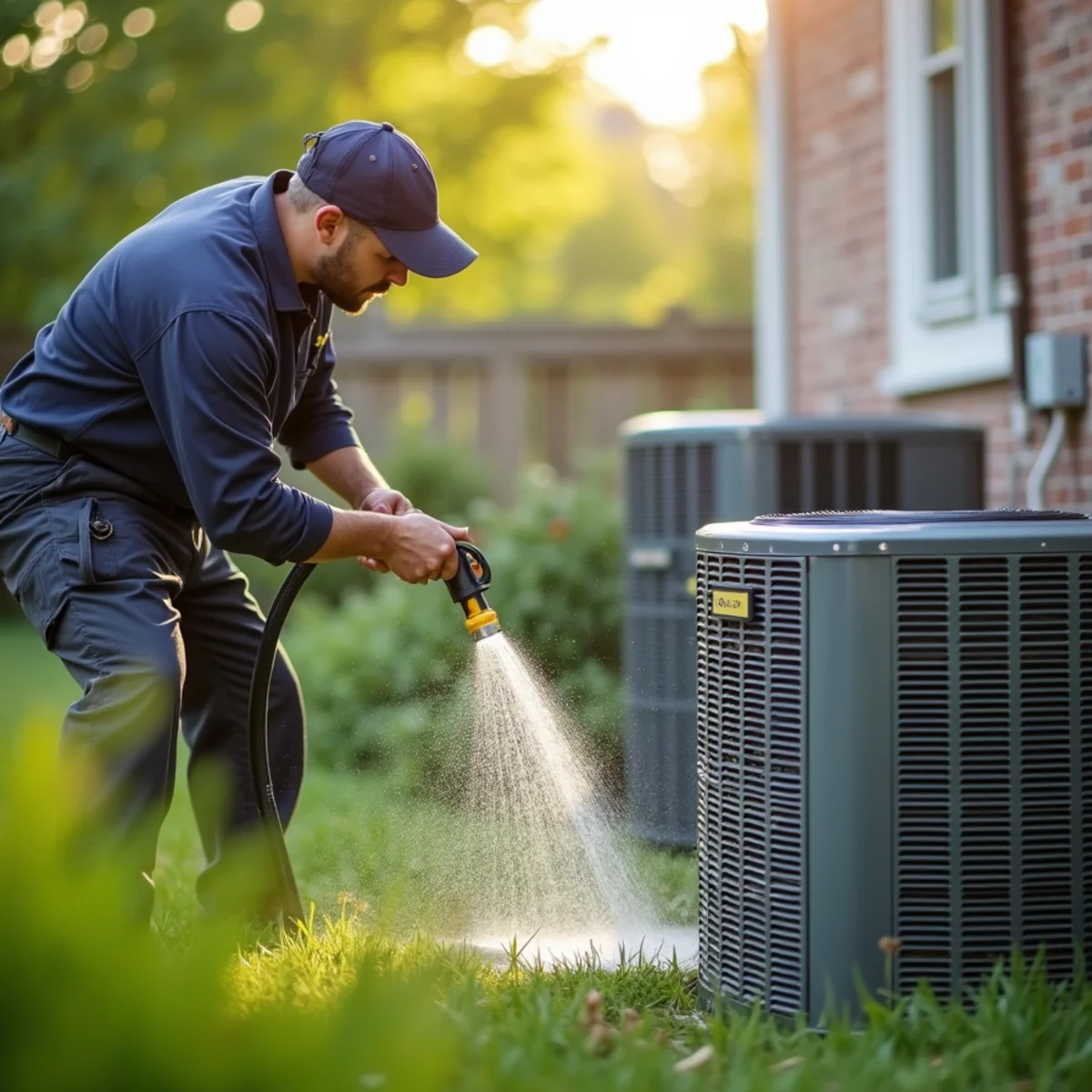
- Rinse the condenser fins gently with a garden hose from the inside out if you can access it, using low pressure so you do not bend the fins. Never use a pressure washer.
- Replace the indoor air filter. A fresh filter protects the blower and helps the system move air efficiently right when demand ramps up.
- Check the condensate drain line where it exits near the indoor unit. Pour a cup of water through to confirm it flows, and look for standing water in the pan.
- Straighten the condenser fan grille and confirm nothing is lodged in the blades.
- Turn power back on, set the thermostat to cool a few degrees below room temperature, and confirm cold air reaches the registers within a few minutes.
Flush the condensate line
A slow drip pan and a clogged drain are the most common summer AC nuisance calls. A cup of distilled vinegar poured into the drain line access port each spring helps keep algae from blocking it and flooding your basement or ceiling.
Pro-only tune-up tasks
The core of an AC tune-up is measurement, and that requires gauges, an EPA Section 608–certified tech, and refrigerant-handling training. These are not DIY jobs.
- Refrigerant charge check. An overcharged or undercharged system cools poorly and dehumidifies worse. Only a certified tech can measure and adjust it, and by law only a certified tech can handle refrigerant.
- Evaporator coil cleaning. The indoor coil is where dehumidification happens. A tech cleans it and inspects the drain pan.
- Electrical and capacitor testing. A weak run capacitor is the leading cause of a condenser that hums but will not start on a hot day.
- Airflow and static pressure. The tech verifies the blower is moving the right volume of air, which directly affects both cooling and moisture removal.
- Compressor amperage and contactor inspection. Catching a pitted contactor or a straining compressor early prevents a mid-summer breakdown.
Spring AC vs. fall furnace timing
| System | Best time to tune | Why then |
|---|---|---|
| Central AC | Early to mid spring | Ready before July heat and humidity peak |
| Heat pump (cooling) | Spring | Same as AC — check charge and coils |
| Gas or oil furnace | Early fall | Ready before the first hard freeze |
| Heat pump (heating) | Fall | Verify defrost and auxiliary heat |
Signs you should call now, not wait
Some symptoms mean the system needs attention before summer, not just a routine tune-up. Book AC repair promptly if you notice weak airflow, warm air from the registers, ice forming on the refrigerant lines, a musty smell when the system runs, or water pooling around the indoor unit. Ice and warm air in particular often point to a low charge or an airflow problem that only gets worse under load.
A yearly spring tune-up through our HVAC maintenance service keeps your system dehumidifying the way it should, and it is exactly what keeps homes across East Hempfield Township, Landisville, and Salunga comfortable through the stickiest weeks of the year.
Beat the July rush — call HVAC Mount Joy PA at +1 (327) 210-5999 to schedule your spring AC tune-up or set up a maintenance plan that covers both cooling and heating seasons.
A tune-up pays for itself
A clean, correctly charged AC uses less energy to reach the same comfort, which shows up on summer electric bills. It also removes humidity more effectively, so you feel comfortable at a higher thermostat setting — saving more.
Rinse the outdoor coil
Between tune-ups, gently rinse the outdoor condenser coil with a garden hose (power off) to clear cottonwood, grass, and dust. A clogged coil makes the system work harder and run hotter — a two-minute rinse pays off all summer.
Related HVAC help in Mount Joy
Services: HVAC Maintenance & Tune-Ups · AC Repair · Indoor Air Quality Solutions
Service areas: HVAC in East Hempfield Township · HVAC in Landisville · HVAC in Salunga
Frequently asked questions
April or early May is ideal in Lancaster County. Tuning the system before the first heat wave means you avoid the peak-season backlog, and any repairs the technician finds can be handled before you depend on cooling every day.
Yes. A dirty coil, a clogged condensate drain, or restricted airflow all reduce your AC's ability to pull moisture out of the air. Cleaning those and confirming the refrigerant charge restores dehumidification, which is often the real comfort problem in our humid summers.
A gentle garden-hose rinse of the outdoor fins is fine for homeowners, as long as you shut off power first and never use a pressure washer. Deeper coil cleaning, refrigerant checks, and electrical testing should be left to a certified technician.
HVAC Mount Joy PA
Licensed, insured HVAC contractor serving Mount Joy and Lancaster County with same-day and 24/7 emergency service. Have a question about your system? We’re glad to help.