Mount Joy carries two separate historic districts, and most of the brick and frame homes in them still lean on hot-water or steam boilers. Here is how to keep that heat honest through a Lancaster County winter.
Key takeaways
- Mount Joy has two NRHP historic districts full of 19th-century homes built around hot-water and steam boilers.
- These systems are durable but need someone who understands combustion, water chemistry, and circulation.
- Careful retrofits preserve original cast-iron radiators and finishes while improving safety and efficiency.
- Annual service before the first freeze catches scale, pressure, and control problems before a no-heat night.
- Keep a period home warm and original with our boiler repair and service.
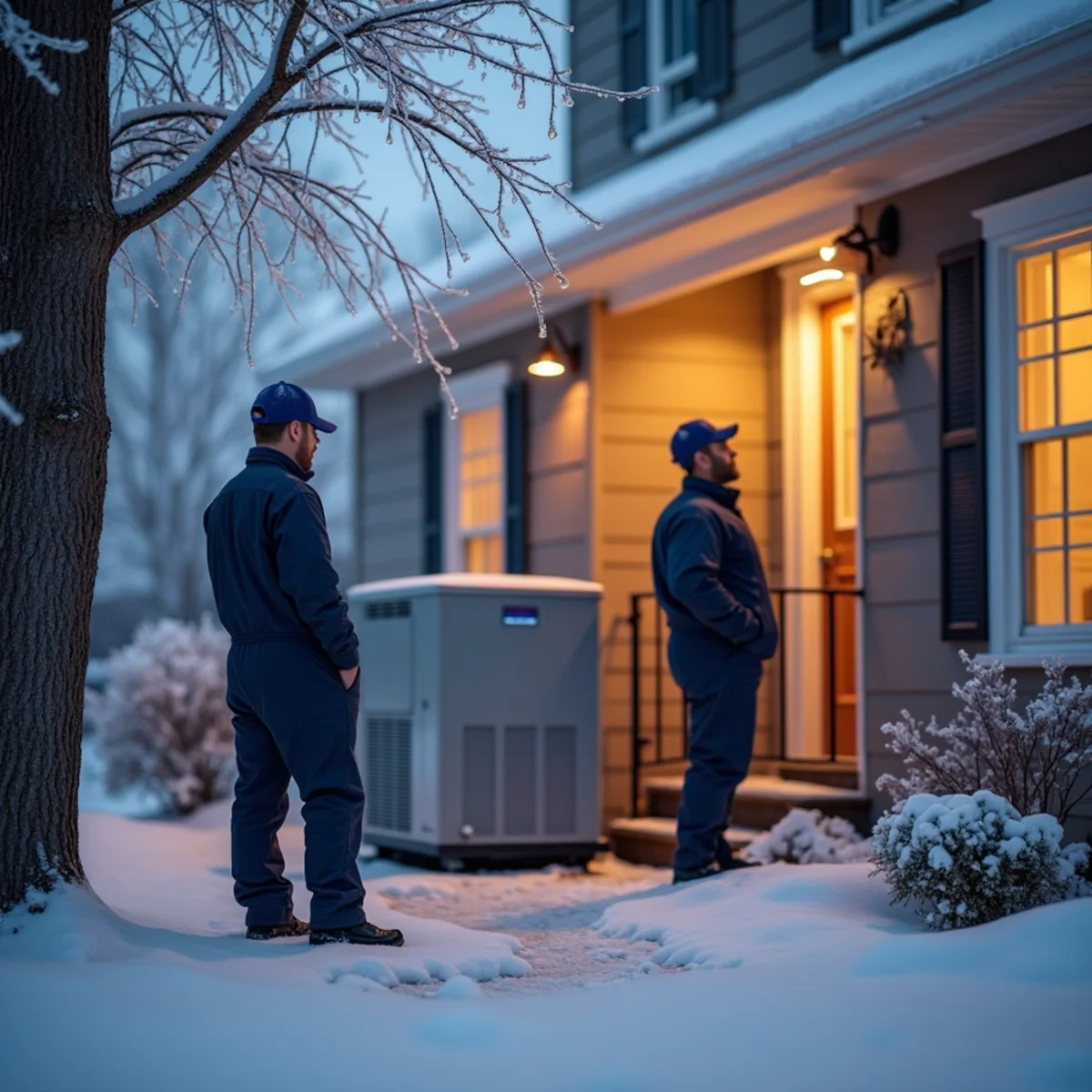
Walk the core of Main Street on a cold January morning and you can almost hear the borough breathing. Steam ticks up through cast-iron risers, hot water murmurs in fin-tube along the baseboards, and the brick facades that earned Mount Joy two separate spots on the National Register hold that heat the way they have for well over a century.
Mount Joy is unusual for a town its size: it carries the Mount Joy Historic District along the Main Street core and the separate Richland Historic District running down East Main. Between them sit hundreds of 1800s brick and frame homes, and a striking number of them still heat with the boiler-and-radiator systems they were built around. That is a gift and a responsibility. Cared for well, a cast-iron boiler outlasts three or four forced-air furnaces. Neglected, it becomes a slow, expensive, and occasionally dangerous problem.
Why so many boilers survive here
When these homes went up, hydronic heat was simply how you warmed a masonry house. Water carries far more heat per cubic foot than air, radiators hold thermal mass, and there were no ducts to thread through 14-inch brick walls. That original logic still holds. Retrofitting ductwork into a protected Mount Joy Historic District home is invasive, often unsightly, and sometimes runs afoul of what the neighborhood expects. So the boiler stays, and the question becomes how to run it safely rather than whether to rip it out.
There is a real split even within the borough. Homes on the Main Street core tend toward one-pipe steam, the oldest technology, while later hot-water conversions dominate elsewhere. Knowing which you have changes everything about maintenance, and it is the first thing a technician should identify.
Steam versus hot water: know your system
One-pipe steam
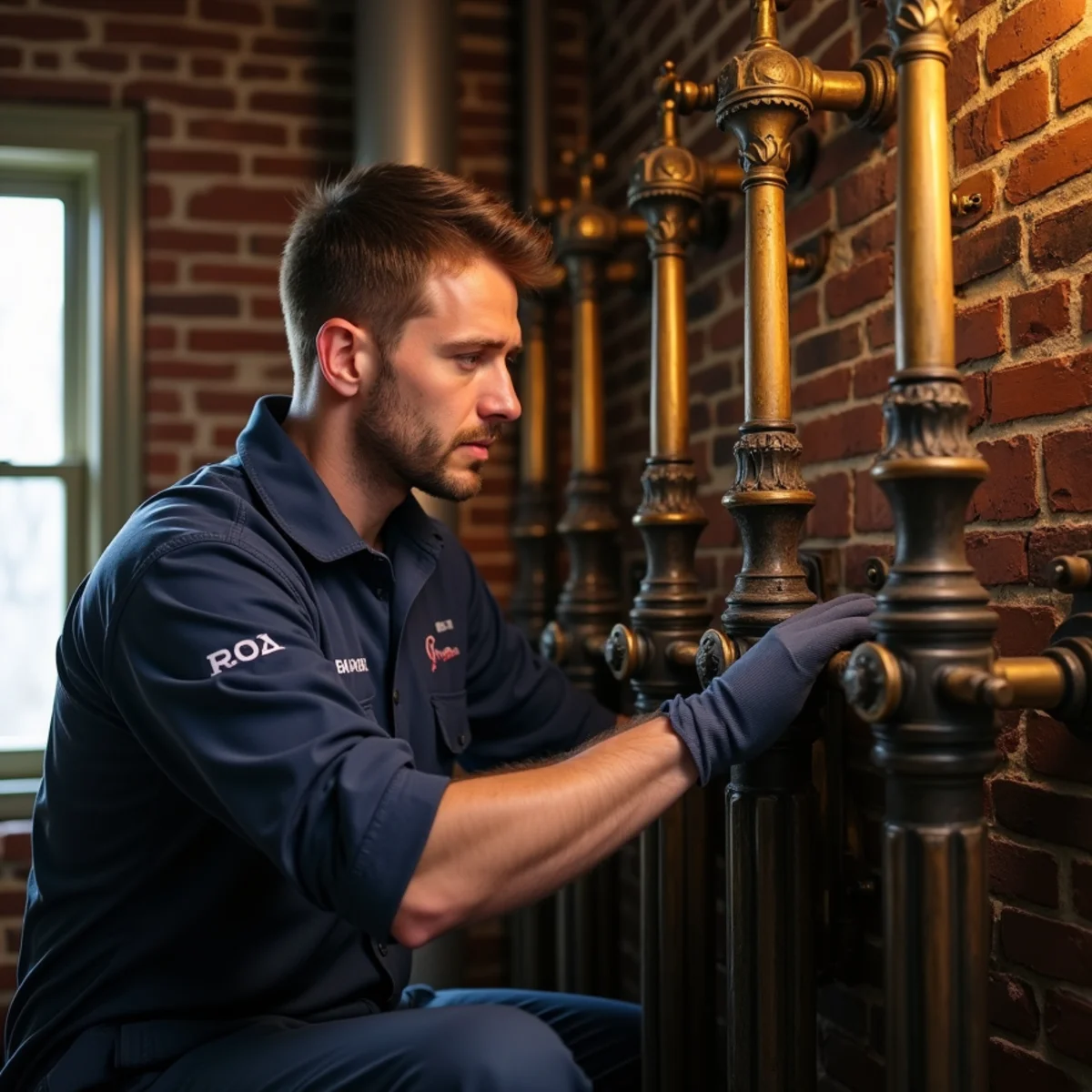
Steam systems have no circulating pump. The boiler makes steam, pressure pushes it up to the radiators, it gives up its heat, condenses, and gravity walks the water back down the same pipe. The whole thing lives or dies on venting and pitch. If a radiator bangs, hisses, or stays cold at the far end, the culprit is almost always a failed air vent, a radiator pitched the wrong way, or wet steam from a dirty boiler. These are inexpensive fixes that get expensive when ignored, because standing condensate corrodes cast iron from the inside.
Hot-water (hydronic)
Hot-water systems circulate with a pump and rely on an expansion tank to absorb the pressure swing as water heats. Failure modes are different: waterlogged expansion tanks, air-bound zones that need bleeding, and circulator pumps that seize after decades. A hydronic system that heats unevenly usually just needs bleeding and a pressure check, not a replacement.
Carbon monoxide is not optional to think about
Any fuel-burning boiler in an old, tight-chimneyed house needs a working flue and a CO alarm on every level. Old masonry chimneys crack and shed liners, and a blocked flue can push combustion gases back into the home. Read our guide on carbon monoxide safety, and never run a suspect boiler to 'get through the night.'
The annual checklist for a period boiler
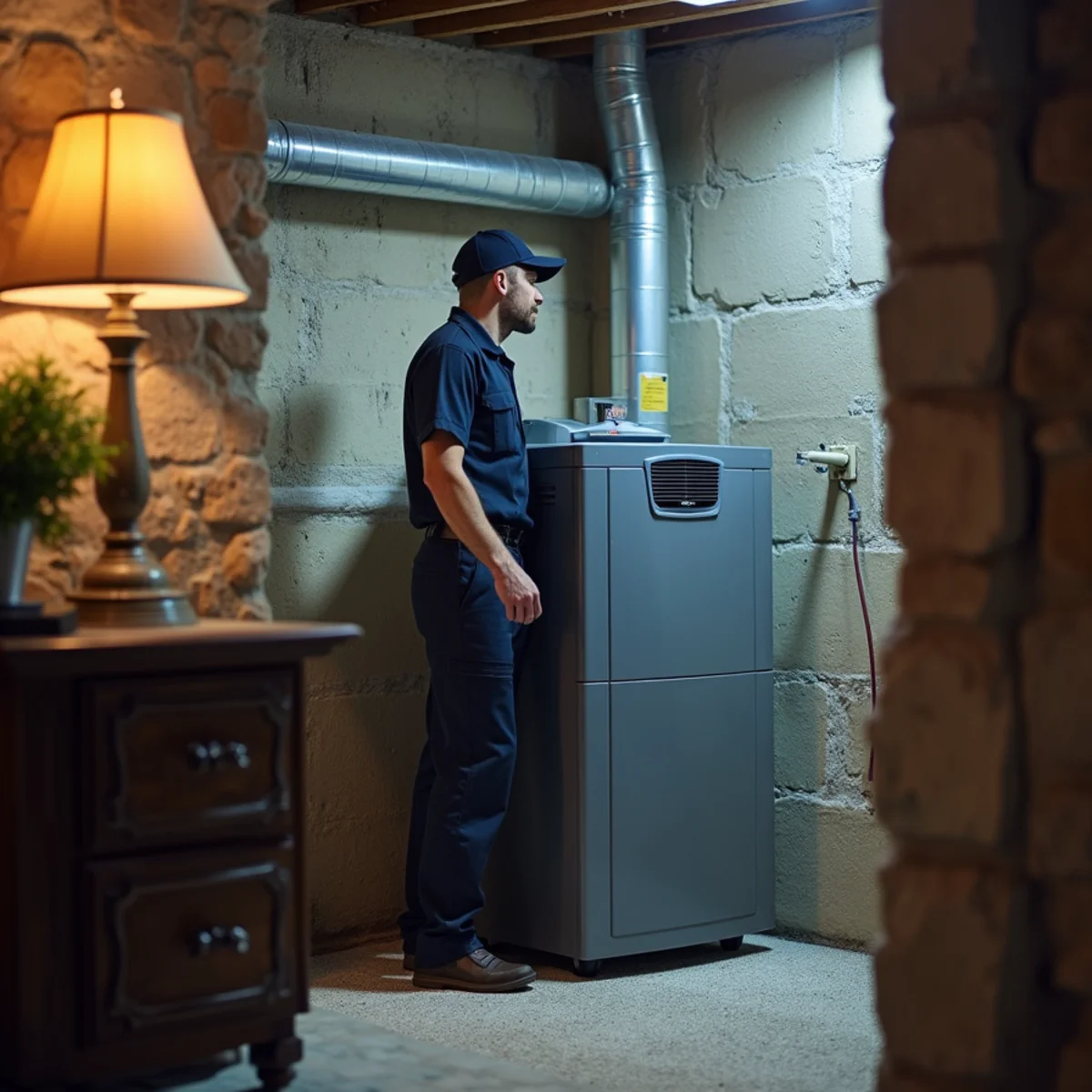
A period boiler rewards a fall tune-up more than almost any other system in the house. Here is what a thorough visit covers:
- Combustion analysis and flue draft check, so the burner runs clean and vents fully
- Low-water cutoff test, the single most important safety control on the boiler
- Steam: skim and flush the boiler to clear oils and sediment that cause wet steam and banging
- Hot water: check expansion tank charge, bleed zones, verify circulator operation
- Inspect the pressure-relief valve and gauge for accuracy
- Check every accessible radiator for pitch, cold spots, and failed vents or valves
- Inspect the chimney base and flue connector for rust flakes and blockage
| Symptom | Steam system | Hot-water system |
|---|---|---|
| Banging or hammering | Trapped condensate, bad pitch, wet steam | Rare; usually thermal expansion noise |
| Cold far-end radiator | Failed air vent | Air-bound zone, needs bleeding |
| Short cycling | Dirty water, faulty controls | Waterlogged expansion tank |
| Visible leaking | Corroded return line | Circulator seal or fitting failure |
Repair or replace an antique boiler?
Old iron is honest iron. A 60-year-old boiler section that holds pressure and passes a combustion test is often worth keeping, especially when replacement means reworking radiators and piping to fit a modern unit. But efficiency matters too: a mid-century boiler may run in the 55 to 65 percent range, while a modern hydronic boiler can push past 90. If you are burning oil or propane and the sections are pitting, the math can favor replacement. Our team walks that decision honestly through boiler repair and, when it makes sense, system upgrades that respect the home. We will not push a new boiler on a system that has another decade in it.
Keep radiators working, not just present
Never paint a radiator with metallic paint; it slashes heat output. Keep furniture and long drapes off the front face, and if a radiator has been shut off for years, have the valve checked before you rely on it in a cold snap.
The bottom line for borough homeowners
A well-kept boiler is part of what makes a historic-district home feel like a historic-district home: quiet, even, radiant warmth that forced air never quite matches. It just asks for attention on a schedule. If yours is banging, running cold at the edges, or has not seen a technician in a few winters, get ahead of it before the first hard freeze off the Susquehanna Valley.
Call HVAC Mount Joy PA at +1 (327) 210-5999 to schedule a boiler inspection or repair. We know these blocks, we know this iron, and we keep 24/7 emergency coverage for the nights it matters most.
Serving both districts and beyond
HVAC Mount Joy PA services boilers and radiators throughout the Mount Joy Historic District, the Richland Historic District, and surrounding Lancaster County neighborhoods. Licensed, insured, and available around the clock.
Balance before you upgrade
In an old boiler home, cold rooms are often a balancing problem, not a boiler problem. Bleeding radiators and adjusting flow frequently fixes the complaint for far less than a new system — we always check that first.
Related HVAC help in Mount Joy
Services: Boiler Repair & Service · Gas Leak & Carbon Monoxide Safety Inspection · Furnace Installation & Replacement
Service areas: HVAC in Lancaster County · HVAC in Mount Joy Township
Frequently asked questions
Look at the piping and radiators. Steam systems usually have a single pipe entering each radiator with a small air vent on the side, and the boiler has a sight glass showing a water line. Hot-water systems have a circulator pump on the piping, an expansion tank, and radiators or baseboard with a bleeder valve. If you are unsure, a technician can identify it in minutes.
Often yes. If the boiler holds pressure, passes a combustion and safety test, and the sections are not pitting or leaking, cast iron can run reliably for decades. The decision shifts toward replacement when efficiency is very low, fuel costs are high, or the sections show corrosion. We assess it honestly rather than defaulting to replacement.
In a steam system, banging usually means condensate is trapped because a radiator is pitched incorrectly or the boiler water is dirty and producing wet steam. Hissing is typically a failed air vent. Both are common in older Mount Joy homes and are usually inexpensive fixes when caught early.
Absolutely. Any fuel-burning appliance vented through an aging masonry chimney can leak combustion gases if the flue cracks or blocks. Install a CO alarm on every level of the home and have the flue inspected annually.
HVAC Mount Joy PA
Licensed, insured HVAC contractor serving Mount Joy and Lancaster County with same-day and 24/7 emergency service. Have a question about your system? We’re glad to help.